Trusting People with Responsibility Helps Teams Grow
Moving Beyond Language Barriers to Create an Organization Where Local Employees Can Contribute Fully
In our previous newsletter, “Trust Begins with Understanding,” we discussed the importance of expatriates and local employees understanding one another’s perspectives. This time, I would like to explore how we can build on that understanding and put trust into practice by entrusting others with responsibility.
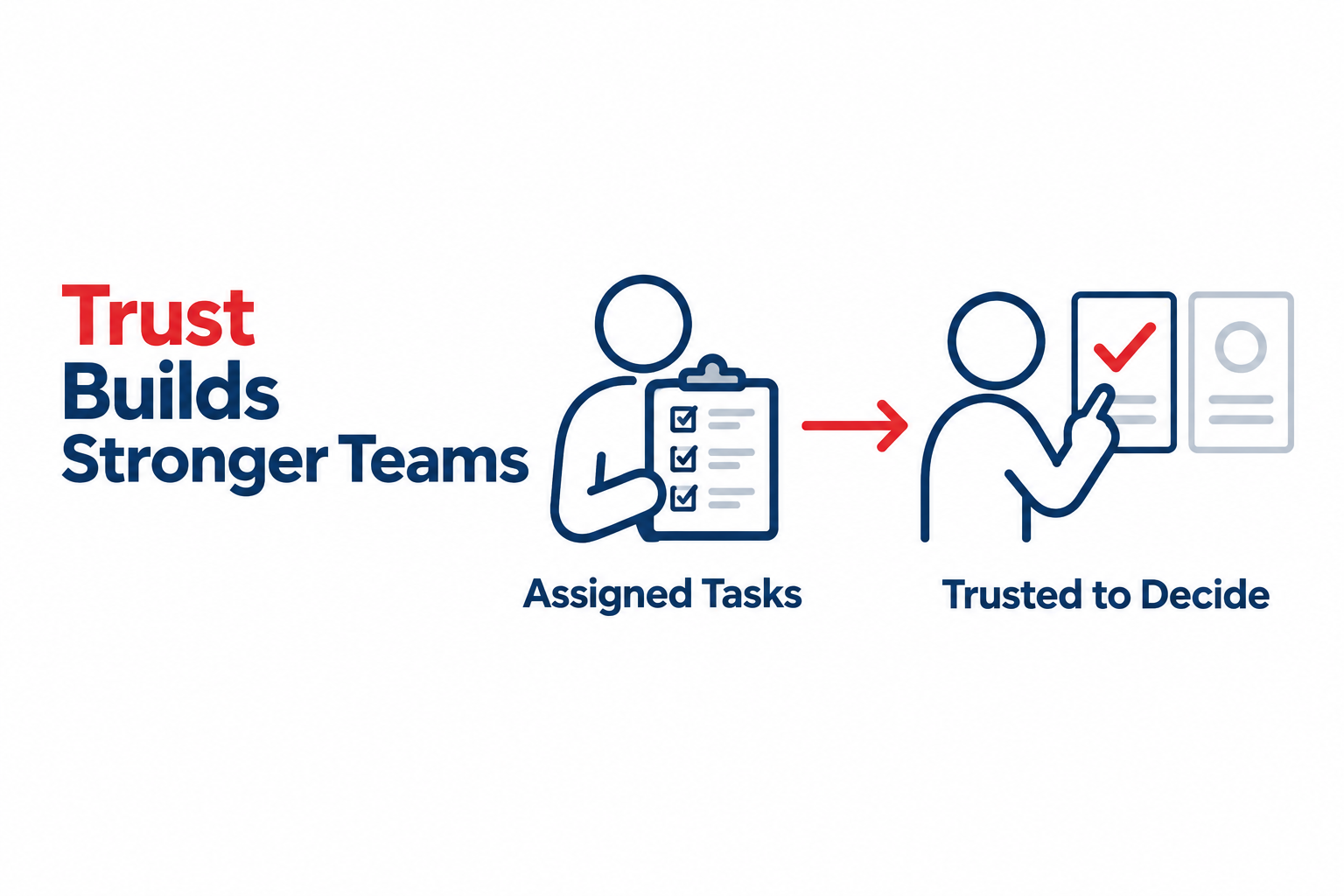
Being Assigned Work and Being Trusted to Make Decisions
In my work at an overseas office, I sometimes reflect on what it means to “entrust local employees with responsibility.”
There is a significant difference between handling day-to-day tasks and being able to use your own judgment and take responsibility for moving the work forward.
For example, someone may manage the recruitment process and coordinate with candidates without having an opportunity to participate in hiring decisions. They may prepare a budget and be asked to explain the numbers, yet not be included in discussions about where the money should be spent.
Of course, not everyone responsible for a task will make the final decision. Still, being asked for an opinion as someone who understands the day-to-day work, or being given the opportunity to make decisions based on your own proposals, can make a meaningful difference to your growth.
Along with saying, “Please take care of this,” simply asking, “What do you think is the best way to move forward?” may change the way someone approaches their work.
When Uncertainty About English Makes Delegation Difficult
For expatriate managers, entrusting local employees with decisions may bring some understandable concerns.
When you first arrive, you may not yet know each person’s experience or strengths. You may still be learning local systems and business practices. At the same time, you are responsible for reporting to headquarters and running the local operation. It is natural to be cautious under those circumstances.
Communicating in English may present an additional challenge.
“Have I fully understood the explanation?”
“Am I missing anything important?”
“If I leave this in their hands and something goes wrong, will I be able to explain what happened?”
These concerns may lead you to check details yourself or work through someone you can consult in Japanese.
Even when we speak different languages, we should still share the same goal of making the company better. Local employees also want to use their experience and expertise to contribute as members of the same team.
Perhaps there is room to trust their experience and judgment a little more, without waiting until you can understand every explanation in English.
Use numbers and written materials. Ask for brief summaries of the key points. Clearly separate decisions that have been made from matters that still need confirmation.
By finding ways to make information easier for both sides to understand, I believe we can gradually expand the responsibilities entrusted to local employees.
People Can Take Initiative When They Know What They Can Decide
Even when employees hear, “We would like you to take more initiative,” they may continue seeking confirmation if they do not know what they are authorized to decide.
If they use their own judgment and are later told, “I would have liked you to discuss that with me first,” it is natural for them to become more cautious the next time.
To entrust people with responsibility, we need to make clear both the outcomes we expect and the decisions they are authorized to make.
“You can proceed as long as these conditions are met.”
“If it would exceed the budget, please discuss it with me in advance.”
“Let’s review any changes that would affect customers together.”
With clear guidelines like these, local employees can act with an understanding of their responsibilities. Expatriate managers can also spend less time checking every detail and devote more time to decisions that require their attention.
If employees are being trusted to make decisions, I hope they will also be given the information they need to do so.
What is the company prioritizing? What budget constraints are there? What concerns does headquarters have?
Understanding that background helps local employees make proposals and decisions with the company as a whole in mind.
Ongoing Conversations Help People Develop Their Judgment
The conversations continue after the scope of responsibility has been agreed.
When the work produces the expected result, what went well? When it does not, where was it difficult to make a decision?
Taking time to reflect on the process as well as the outcome helps carry that experience into future work.
“What led you to choose that approach?”
“Was there any information you needed but did not have?”
“What do you think we should do differently next time?”
Through these conversations, local employees can develop their judgment, while expatriate managers gain a better understanding of how each person thinks and where their strengths lie.
Without judging everything by a single result, we can gradually expand the scope of responsibility as experience grows. I believe these experiences help build relationships in which we feel confident entrusting others with responsibility.
Local Employees Also Have a Responsibility to Live Up to That Trust
As local employees, we also have a part to play.
When making proposals, we should clearly explain our reasoning and the available options. Along with progress updates, we should share concerns and problems early. When we are unsure about a decision, we should seek guidance at the right time. We also need to be able to explain the decisions we make.
Expatriate managers will not necessarily know every aspect of the local environment. We need to keep that in mind and make an effort to communicate in ways that help them make informed decisions.
We can show through our daily actions that we want to be trusted with responsibility. I believe living up to that trust is part of our role, too.
Looking Beyond Their Current Role to Their Future
Local employees who have supported day-to-day operations for many years may be people you can rely on with confidence. At the same time, being relied on can mean continuing in the same role.
What would they like to take on next? Would they like to lead a team, deepen their expertise, or gain experience in a new area?
How often do they have the opportunity to talk about those aspirations?
Doing their current job well does not necessarily mean they want to continue in the same role in the future.
By learning what they hope to do, we can think together about the experience they will need for their next role and entrust them with work that helps them gain it.
With that kind of support, local employees may find it easier to envision their future with the company.
Closing Thoughts
An expatriate assignment has an end date, but the local business continues beyond it.
What results were achieved during the assignment? And what decisions will the local team be able to make independently after the expatriate returns home?
I believe paying attention to both can help the overseas operation grow.
We may face language barriers, but we are still colleagues working toward the same goal.
Expatriate managers can show confidence in local employees by giving them opportunities to take responsibility. Local employees, in turn, can think carefully, take action, and accept responsibility in order to meet those expectations.
The experience of working together in this way becomes the basis for further trust.
We can take one more step beyond the understanding discussed in the previous newsletter: trust in another person’s abilities, entrust them with responsibility, and create opportunities for them to put those abilities to work.
I believe that is where our growth as a team begins.
※This article is intended as general information only and does not constitute professional advice. Using this document or any other material provided by Premier Kaikei LLP, Premier does not create a professional-client relationship. All information should be independently verified before being relied on or acted upon. Please speak to an experienced professional for case-specific questions.